

1000 welcomes to Nova Scotia!
Céad míle fáilte!
Hi, I'm Julia. I'm a lifelong Nova Scotian who helps people from across Canada — and around the world — find their perfect home on the East Coast. Whether you're moving for work, family, or just a better pace of life, I'm here to make it feel easy. I've done this a lot... so I know what questions you have before you even ask them. Start with the buyer's guide below, check out some of the helpful resources on this page, and reach out whenever you're ready. I'm easy to talk to, free to work with, and I genuinely love helping people who "Come From Away" find their dream home.
With warmest regards,
Julia Fauteux
“
“Julia has been boots on the ground for us when we couldn’t be there in person. She’s gone above and beyond to make this move easier on our family.”
— K.R., Ontario


If you've been wondering:
-
How does the Nova Scotia non-resident deed transfer tax work?
-
Can I qualify for a mortgage using out-of-province or foreign income?
-
Can I buy a home before I move?
-
Can non-Canadian citizens purchase property in Nova Scotia?
-
Should I rent first or buy right away?
-
Which areas of Nova Scotia make the most sense for remote workers?
-
How do I choose the right community for my lifestyle and goals?
-
How much time should I spend in Nova Scotia before making an offer?
-
Why are homes often more affordable here than in other parts of Canada?
-
What mistakes do newcomers most commonly make?
-
How do healthcare access and schools affect where I should live?
-
What surprises most people after they relocate?
-
Can someone help me narrow down communities before I start house hunting?
-
... or any other question along these lines....
then this website is for you!
Check out the FAQ section below.
these 13 questions are answered in full at the bottom of this page!
Where Should You Live in Nova Scotia?
Answer 10 quick questions and get personalized area recommendations
tailored to your lifestyle and budget.

Ready to find your perfect East Coast location? Click the picture to start the quiz now.
The Real Costs of Buying a Home in Nova Scotia
Buying a home in Nova Scotia involves more than just your down payment. From legal fees and land transfer taxes to inspections, insurance, and utility adjustments, it’s important to understand the full picture before you buy. Here’s a breakdown of the most common costs buyers should plan for so there are fewer surprises along the way.
Example Purchase Prices
A modest $250,000 in rural areas or an average in HRM for $600,000
Down Payment
Can be as low as 5% of purchase price; Will reflect your personal finances/ your goals.

Legal Fees &
Closing Costs
In addition to your down payment, you should budget 2%-12% for final closing costs. This would include deed transfer tax and legal fees.
Home Inspections
Standard inspections range from $400 to $1,200 depending on property size and details.
Operating Costs
Your mortgage + house insurance + utilities + property tax + maintenance slush fund + life
If you do not intend to make Nova Scotia your primary residence within 6 months of taking ownership — for example, if the property will be a second home, seasonal property, or a purchase for a child attending school — it’s important to understand Nova Scotia’s Non-Resident Deed Transfer Tax. Introduced in 2022, this tax can add a substantial additional closing cost for out-of-province buyers who do not qualify for an exemption. Complete details can be found here. Connect with Julia if you have specific questions.
A Nova Scotia Roadmap:
From House Hunting to Handing Over the Keys
STEP 01
Market Research & Location Selection
STEP 02
Pre-Approval & Financing
STEP 03
View Homes Online, Then in Person
STEP 04
Write a Winning Offer
From Conditions to Closing
STEP 05
Location, location, location! A great first step in house hunting is identifying the perfect community for you - based on lifestyle, family make-up, local amenities, work needs, or personal goals. Do you want to move to a specific neighbourhood in Halifax, a suburban area, or a rural escape? Julia can help make sense of NS geography.
Securing a mortgage in Nova Scotia requires specific documentation. Getting pre-approved for your financing is mandatory before looking at homes. If you need help finding a trusted broker, Julia can help you.
While there are many websites for browsing homes, Julia can create a personalized search site tailored to your preferred locations and wish list. When you're ready, viewings can be arranged in person or virtually at your convenience. Insider tip: many people love the website www.viewpoint.ca to find NS homes.
Strategy is key in today's dynamic market. Julia will create your strongest offer, including a multitude of conditions to protect you against risk.
Julia is your boots on the ground from offer to closing your transaction. From recommending qualified professionals, inspectors, to lawyers - Julia makes your experience seamless. Need moving help? Julia can do that, too.
For a complete timeline of events, download the relocation guide!
Nova Scotia's Academic Opportunities
Nova Scotia offers more educational opportunities than many people expect. Families can choose from strong public schools, respected private schools, and French-language education through the CSAP system across the province. Nova Scotia is also home to excellent post-secondary options, including highly regarded universities and the NSCC system, which is known for practical, career-focused programs that connect directly to the workforce. Whether your family is focused on academics, skilled trades, bilingual education, or smaller community-based learning environments, Nova Scotia offers a wide range of paths forward.


Child Care
Nova Scotia Private Schools
Halifax School Finder
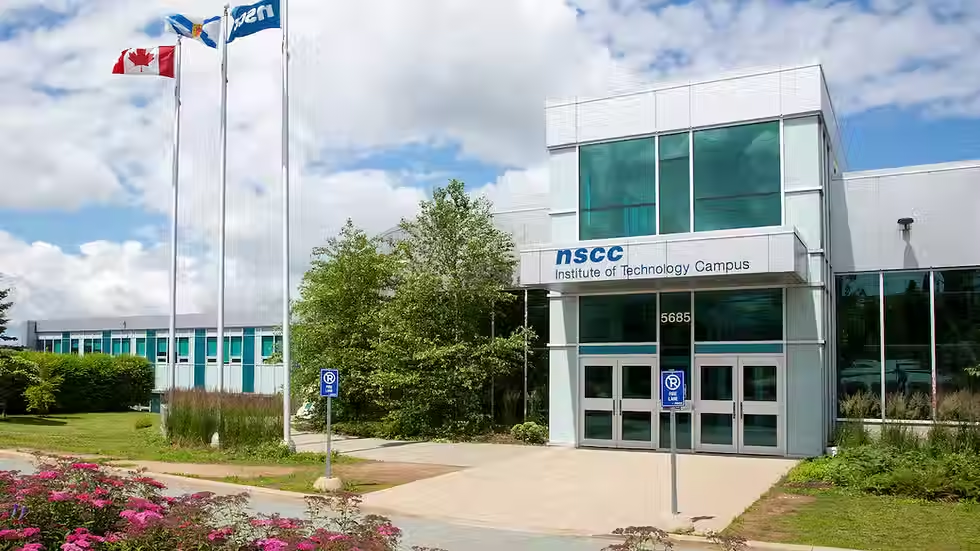


14 Nova Scotia Community College Campuses
10 Universities
Conseil Scolaire Acadian Provincial
Ready to see your future Nova Scotia home in person?
Whether you’re planning a relocation trip, coming to Nova Scotia on a military house hunting tour, or simply at the point where online browsing has turned into “okay… we need to see these in person,” I’d be happy to show you around.
A house hunting trip here is about more than just unlocking doors. It’s getting a feel for the communities, commute times, schools, beaches, coffee shops, and whether a place actually fits your lifestyle once you step outside the listing photos.
I offer complimentary, personalized house hunting tours designed to help you explore Nova Scotia in a way that’s informative, efficient, and genuinely enjoyable. In my opinion, if you’re flying across the country to potentially change your life, the experience should feel a little exciting too.

“
“Living in Ohio and planning our move to the 902, Julia really went the distance. She gave us great info on each area and made remote viewings feel easy.”
— J.W., Ohio

Healthcare Help
If you're relocating from another Canadian province:
Keep using your old health card — your old province continues to cover you for roughly two months. If you're a new permanent resident or have a work permit valid for at least 12 months, you're eligible for MSI right away.
If you're relocating from outside of Canada:
Before you arrive in Nova Scotia, buy short-term private health insurance to cover you during any gap period. Companies like Manulife, Sun Life, and Blue Cross all offer affordable options. You should also scan copies of your ID, immigration documents, and any current health card so they're ready to submit.
Applying for MSI (aka Nova Scotia's provincial's government health insurance plan)
Go to novascotia.ca and search "apply for health card."
Download and fill out the Registration for Health Services Form, then submit it online, by email at MSI@medavie.ca, or by calling 1-800-563-8880.
Along with your form, include a piece of photo ID, proof that you're allowed to live in Canada (such as your PR card, work permit, or Canadian passport), proof of your Nova Scotia address (a lease or utility bill works well), and your old provincial health card if you have one.
Your card will arrive by mail within a few weeks. Sign the back as soon as it arrives, as it is not valid without your signature. Bring it to every doctor's appointment or hospital visit.
Finding a Family Doctor
Finding a family doctor (also called a GP) in Nova Scotia can take time, as there is a province-wide shortage. The first thing you should do is register with the Need a Family Practice registry at needafamilypractice.novascotia.ca — this is the official waitlist and it is free to join. Once registered, you will be matched with a family doctor or nurse practitioner in your area when one becomes available. It is also advisable to use word-of-mouth to source your own GP. The squeaky wheel gets greased.
In the meantime, you can still get care. Walk-in clinics are available across the province and are covered by MSI — you simply show your health card. The 811 line is also available 24 hours a day, seven days a week, where a registered nurse can assess your symptoms over the phone and advise you on next steps.
You must live in Nova Scotia for at least 183 days per year to maintain your MSI coverage.

“
“Very responsive, thinks outside the box, and treats everyone the same. I’ve worked with several realtors and none can compare to Julia.”
T.K., TEXAS
Retirement in Nova Scotia: a dream for many,
reality for you.
Retiring to Nova Scotia is more than just a change of scenery—it's a transition into a new way of life. Julia understands the unique needs of retirees, from finding the perfect coastal climate to navigating the local healthcare system. When you're ready, get in touch with Julia to plan your move.
-
1. The 10% deed transfer tax surcharge Most retirees have no idea this exists. If you close on a home but delay your move to NS by more than 6 months, you owe an additional 10% on the deed transfer tax. Timing your closing date around your actual move is something Julia navigates with you from day one.
-
2. Family doctor access varies wildly by community Nova Scotia has a well-publicized doctor shortage — but it's not uniform. Some communities have reasonable access; others have wait lists measured in years. Where you buy isn't just a lifestyle choice, it's a healthcare decision. Julia knows the difference.
-
3. MSI has a waiting period — and most people don't plan for it Your current provincial health coverage doesn't transfer on day one. There's a gap. Knowing exactly how long that gap is, and what it means for any ongoing prescriptions or specialist care, is something to sort out before moving — not after.
-
4. Rural retirement means a car, always ... Not "it would be handy." Not "for the occasional trip." A car, year-round, in all weather, non-negotiable. If driving is becoming a concern for you or your partner, that conversation should shape where you buy — and Julia will have it with you honestly.
-
5. Your dollar genuinely goes further — but not everywhere equally The Annapolis Valley, South Shore, and Cape Breton offer dramatically better value than the Halifax market. For retirees on a fixed income, the difference between buying in Bedford vs. Wolfville isn't just scenery — it can be $150k in purchase price and meaningfully lower property taxes.
The best resource page in the history of resource pages for questions about moving to Nova Scotia:
For information on everything from arts and entertainment to home inspectors to transit schedules to property taxes (and EVERYTHING in between), check out Julia's indexed resource page. If questions still remain unsolved, send Julia your inquiry - she will solve it! CLICK PHOTO FOR ACCESS


Julia is BGRS certified
Are you moving to Nova Scotia with CAF? Julia can help. BGRS (Brookfield Global Relocation Services) is the mandatory relocation provider for Canadian Armed Forces moves under the Integrated Relocation Program (IRP). Military members must complete their move through BGRS to access approved benefits, reimbursements, and relocation funding. Independent arrangements made outside the program may not be covered.
Frequently Asked Questions
(other than, "who's your father?"...)
1. What does the Nova Scotia Non-Resident Deed Transfer Tax mean for me, and how do I avoid It?
If you're planning to make Nova Scotia your new home, you'll want to be aware of the Provincial Non-Resident Deed Transfer Tax. For most buyers who are genuinely relocating to the province, it's simply something to understand and plan for early in the process.
As of April 1, 2025, Nova Scotia charges a 10% Provincial Non-Resident Deed Transfer Tax on certain residential property purchases made by non-residents. This tax is separate from any municipal deed transfer tax that may apply.
The important thing to know is that many buyers relocating to Nova Scotia can qualify for an exemption. Generally speaking, if you're purchasing a home to become your primary residence and establish Nova Scotia residency within the required timeframe after closing, you may be able to avoid the tax entirely.
Where buyers should pay closer attention is when the property will not immediately become their primary residence. Vacation homes, investment properties, homes purchased for children attending university, or purchases made before relocation plans are finalized can all have different tax implications.
The takeaway? If your intention is to move to Nova Scotia and make it home, this tax is usually very manageable—provided you understand the requirements and update your residency information within the required timeframe. As part of my relocation consultations, I review these rules with buyers early on so they can move forward with confidence and avoid any surprises later.
Complete details can be found here.
2. I’m getting a mortgage; does my out-of-province or foreign income actually qualify with Canadian lenders?
Usually, yes, but not always in the way buyers expect. One of the biggest misconceptions I encounter is that mortgage approval is based solely on income. In reality, lenders care just as much about where your income comes from, how long you've been earning it, and how easily it can be verified.If you're relocating from another Canadian province and working for a Canadian employer, the process is often straightforward.
However, if you're self-employed, paid by commission, work on contract, or earn income from outside Canada, additional review is typically required. Foreign income can be particularly complex. Some Canadian lenders are comfortable lending against income earned in the United States, the United Kingdom, Europe, Australia, and other countries. Others are more restrictive. In many cases, lenders will want to see employment contracts, tax returns, pay statements, bank records, proof of work authorization, and evidence that your income is likely to continue after your move.
The currency you are paid in can also matter. While many lenders will consider foreign income, some apply adjustments to account for exchange rate fluctuations. This means that earning the equivalent of $150,000 CAD annually does not necessarily mean the lender will use the full $150,000 when calculating your borrowing power.
Self-employed buyers often face additional scrutiny regardless of where they live. Many lenders prefer to see two years of tax returns, stable business income, and a proven track record before using self-employment income for qualification purposes. Buyers are sometimes surprised to learn that a business generating strong revenue today may not qualify as easily as long-term salaried employment.
Relocating buyers should also understand that a mortgage pre-approval is not always a guarantee. If you plan to change jobs, switch from employee to contractor, become self-employed, or move to a different employer after arriving in Nova Scotia, your financing situation can change significantly.
The good news is that most of these challenges can be addressed with proper planning. Mortgage brokers who regularly work with relocation clients often have access to lenders that are more flexible with foreign income, self-employment income, military postings, and non-traditional employment situations.
My recommendation is to speak with a lender or mortgage broker before you begin your home search. A short conversation with the right mortgage professional can help ensure you're searching in the correct price range and with the right strategy.
3. What parts of Nova Scotia actually make sense for remote workers, and what's the honest trade-off?
Remote work gives buyers far more flexibility in Nova Scotia, but not every community is equally practical. For many remote workers, the sweet spot is within about 60–90 minutes of Halifax. Communities such as Mahone Bay, Lunenburg, Bridgewater, Chester, Windsor, Truro, and Wolfville often provide significantly more houses and property for the same budget while maintaining reasonable access to Halifax, the airport, major hospitals, and other services.
Once you move beyond that range, the lifestyle can be fantastic, but the trade-offs become more noticeable. A routine specialist appointment may require a multi-hour drive. Airport trips become a full-day commitment. Children's sports, shopping, and other services may involve considerably more travel than newcomers expect. Internet is another factor that deserves careful attention. While much of Nova Scotia has access to high-speed internet, coverage can vary dramatically between communities and even between neighbouring roads. If your income depends on a reliable connection, internet availability should be verified before making an offer.
The best location depends largely on how often you need to access Halifax. If you're fully remote and rarely travel, communities farther from the city may offer exceptional value. If you're commuting regularly, travelling for work, or need frequent access to healthcare and services, living closer to Halifax is often worth the additional cost. Many buyers start their search by looking at houses. I prefer to start by looking at how you'll actually live. That approach usually leads to better long-term trade-off.
4. How do I choose the right Nova Scotia community?
Choosing where to live in Nova Scotia can be equally important as choosing which house to buy.
Many relocation buyers begin their search by comparing home prices, waterfront access, acreage, or commute times. While those factors matter, they rarely tell the whole story. The right community depends on how you actually plan to live once you arrive.
When helping buyers relocate, I look at factors such as employment location, travel requirements, healthcare access, schools, internet reliability, recreation, proximity to family, and long-term goals. I also consider factors that buyers don't always think to ask about, such as airport access, availability of trades and services, winter driving conditions, future resale potential, and how often they realistically expect to visit Halifax.
For example, a remote worker may initially be drawn to a beautiful waterfront property on the South Shore, only to realize later that frequent airport trips, specialist appointments, or children's activities require more driving than expected. Conversely, some buyers assume they need to live close to Halifax when their lifestyle would actually be better suited to communities such as Mahone Bay, Lunenburg, Wolfville, Windsor, Chester, or Bridgewater.
Two buyers with identical budgets can end up in completely different communities because their priorities are different. A family with young children may prioritize schools and sports programs. A retiree may focus on healthcare access and walkability. A military family may value commuting options and future resale. A remote worker may prioritize internet reliability and lifestyle over proximity to an office.
Nova Scotia is a relatively small province geographically, but the lifestyle differences between communities can be significant. Living in downtown Halifax is a very different experience from living on the South Shore, in the Annapolis Valley, or in Cape Breton.
If you're still deciding where to focus your search, visit my "Where Should I Live in Nova Scotia?" guide. It compares many of the province's most popular communities and highlights the advantages, trade-offs, commute times, housing styles, and lifestyle considerations that newcomers should understand before making a move.
The best move is rarely determined by the house alone. It's determined by whether the community supports the life you want to build after you arrive.
5. How many days should I plan to spend in Nova Scotia before making an offer on a home?
If you've never lived in Nova Scotia before, I generally recommend spending 3–5 days here before making an offer. If you're considering multiple communities or a broad geographic area, a week is often worthwhile.
Part of that time should absolutely be spent viewing homes. Photos, floor plans, virtual tours, and video walkthroughs are helpful, but they don't tell the whole story. Ceiling heights, room flow, natural light, traffic noise, privacy, neighbourhood feel, maintenance requirements, and overall condition are all things that are much easier to assess in person.
That said, a successful house-hunting trip should focus on both the homes and the communities. Most relocation buyers are evaluating two major decisions at the same time: Which house should I buy? and Where should I live?
A typical day might involve viewing several properties while also exploring the surrounding area. I often encourage clients to visit local grocery stores, drive commute routes, check out recreation facilities, and spend time in the downtown cores of communities they're considering. If you have children, schools and extracurricular opportunities are often part of the discussion. If you're working remotely, internet reliability and access to services may be equally important.
The amount of territory you're covering also matters. If you've already narrowed your search to Bedford and Dartmouth, three days may be plenty. If you're trying to decide between Halifax, the South Shore, and the Annapolis Valley, you'll likely benefit from additional time.
Many relocation clients are surprised by how different Nova Scotia communities can feel despite being relatively close together geographically. Likewise, many are surprised by how different homes can feel in person compared to what they expected online.
It would by my honour to help you make the most of your visit so you leave with a clear understanding of your options, and have a great time doing it.
6. Why are homes in Nova Scotia often less expensive than where I'm coming from?
For many buyers relocating from Ontario, British Columbia, Alberta, the northeastern United States, or major international cities, Nova Scotia housing prices can seem surprisingly affordable.
The short answer is that Nova Scotia is a smaller market with lower population density, lower land values, and fewer large urban centres competing for housing. While Halifax has experienced significant price growth in recent years, home prices here remain well below many major Canadian and international markets.
As of 2025, the average home price in the Halifax Regional Municipality was approximately $620,000. In comparison, average home prices in the Greater Toronto Area and Greater Vancouver Area were well over $1 million. Outside Halifax, many Nova Scotia communities remain considerably more affordable.
What often surprises newcomers is not just the price difference, but what that price buys. In many cases, buyers can purchase a detached home with a yard, garage, and multiple bedrooms for less than the cost of a condominium in larger urban centres.
That said, lower prices do not automatically mean better value. Depending on where you buy, you may encounter private wells, septic systems, older housing stock, longer commutes, or fewer municipal services than you are accustomed to.
This is why I encourage buyers to focus on lifestyle and location (not just price!). A waterfront property two hours from Halifax may cost less than a suburban home in Bedford, but those properties serve very different needs.
One of my favourite parts of working with relocation clients is helping them understand where the opportunities are, where the trade-offs are, and how far their budget can realistically go in different parts of the province.
7. What are the biggest mistakes people make when relocating to Nova Scotia?
Most relocation buyers do a great job researching homes. The challenges usually come from the details they didn't realize they needed to research.
One common mistake is assuming every property has municipal water and sewer. In many parts of Nova Scotia, private wells and septic systems are completely normal. There's nothing inherently wrong with them, but buyers should understand the maintenance requirements, testing recommendations, replacement costs, and the system's age before purchasing.
Another is assuming internet service is the same everywhere. A property may have spectacular ocean views, but if you're working remotely, internet speed and reliability should be verified before making an offer. I've seen buyers fall in love with a home only to discover it doesn't support their work requirements.
Healthcare is another area that deserves careful consideration. Many newcomers focus on the nearest hospital but forget to research access to family doctors, pharmacies, specialists, physiotherapy clinics, and other services they use regularly.
School catchment areas can also surprise buyers. A home's mailing address does not always guarantee attendance at a particular school. Families should confirm school eligibility directly before making a purchase decision.
For buyers who travel regularly, airport access often becomes more important after the move than before it. A home that feels like a bargain may lose some appeal after your tenth 5:00 a.m. drive to the airport.
Insurance costs are another item buyers don't always investigate early enough. Waterfront properties, rural properties, older homes, and homes with certain heating systems can have very different insurance costs and availability than buyers expect.
Perhaps the biggest surprise for many newcomers is understanding just how rural some parts of Nova Scotia can be. Outside Halifax, communities are generally much smaller than what buyers from larger provinces, states, or countries may be accustomed to. Access to shopping, healthcare, restaurants, tradespeople, sports programs, entertainment, and other services can vary dramatically from one community to the next. In Nova Scotia, when people say they're "going to the city," they're almost always referring to Halifax. That's because Halifax functions as the province's primary urban centre, while many other communities operate at a much smaller scale.
None of these factors should discourage you from exploring rural Nova Scotia. In fact, many buyers are specifically seeking the slower pace, lower population density, and stronger sense of community that these areas offer. The key is understanding the trade-offs before you buy so you can choose a community that aligns with how you actually want to live.
8. Can I buy a home in Nova Scotia before moving here?
Yes. Many of my relocation clients purchase a home before physically moving to Nova Scotia.
Today's technology makes it possible to complete much of the process remotely through video walkthroughs, virtual meetings, electronic signatures, and digital document sharing. I regularly work with buyers who are relocating from other provinces, the United States, Europe, and elsewhere around the world.
That said, buying a home remotely requires more planning than buying locally. While I can provide detailed videos, neighbourhood insights, measurements, and on-the-ground observations, there is no substitute for experiencing a property and community in person. Whenever possible, I encourage buyers to visit Nova Scotia before making a purchase, especially if they have never spent meaningful time here before.
If an in-person visit isn't possible, it's important to do additional due diligence. That may include reviewing internet availability, confirming school options, understanding healthcare access, researching insurance costs, and learning about private wells, septic systems, and other features that may be unfamiliar to newcomers.
Buyers should also be aware that purchasing before moving can have tax implications. Nova Scotia's Provincial Non-Resident Deed Transfer Tax can add tens of thousands of dollars to a transaction if the buyer does not qualify for an exemption. If you're planning to relocate to Nova Scotia, the timing of your move matters. Before making an offer, it's important to understand whether the tax applies to your situation and what steps may be required to avoid it.
Closing logistics are another consideration. If you are unable to be in Nova Scotia leading up to closing, your lawyer may need to arrange for documents to be signed before a notary public, commissioner of oaths, or lawyer in your home jurisdiction. In some cases, original documents may need to be couriered back and forth. While these situations are common and manageable, they do require additional coordination and should not be left until the last minute.
If possible, I generally recommend arriving in Nova Scotia before closing day. This gives you an opportunity to complete a final walkthrough, meet service providers, collect keys, and address any last-minute issues that may arise. It also makes the transition into your new home considerably smoother.
The good news is that thousands of buyers successfully relocate to Nova Scotia every year. With proper planning, experienced legal and mortgage professionals, and strong local guidance, purchasing before your move can be a straightforward and stress-free process.
9. I’m not a Canadian citizen. Can I still buy property in Nova Scotia?
Maybe. The answer depends on your immigration status, where you're looking to buy, and the type of property you're purchasing.
Many people are surprised to learn that Canada currently has federal restrictions on certain residential property purchases by non-Canadians. The rules are complex, contain numerous exemptions, and have been extended until January 1, 2027.
The good news is that being a non-Canadian citizen does not automatically prevent you from purchasing property. Permanent residents can buy property. Certain temporary residents with valid work permits may also qualify, as can some international students and protected persons under specific circumstances.
Where buyers can run into trouble is assuming they are eligible without confirming the details first. Your ability to purchase may depend on factors such as your residency status, work authorization, intended use of the property, and where the property is located. Some property types and locations may be exempt from federal restrictions, while others are not.
Financing is another consideration. Canadian lenders often have different down payment requirements for non-permanent residents and foreign nationals. In some cases, buyers may be required to provide a larger down payment, additional documentation, proof of income, proof of funds, or evidence of their ability to remain in Canada long-term.
Buyers should also understand that purchasing a home and immigrating to Canada are two separate processes. Owning Canadian real estate does not create a pathway to permanent residency, citizenship, or immigration approval.
If you're considering a move to Nova Scotia from another country, I strongly recommend confirming your eligibility with an immigration professional, real estate lawyer, and mortgage professional before beginning your home search. A short conversation early in the process can save significant time, expense, and frustration later.
The good news is that I regularly work with newcomers, temporary residents, and international buyers. If you're unsure whether purchasing is possible in your situation, we can usually identify the answer very quickly and determine what your next steps should be.
10. How do healthcare and school access affect where I should buy?
More than most relocation buyers realize.
Many people focus on housing prices, commute times, or proximity to the ocean. Those factors matter, but the availability of healthcare and education can have a much greater impact on your day-to-day life once you've moved.
When it comes to healthcare, not all hospitals provide the same level of service. Nova Scotia has major regional hospitals, community hospitals, urgent treatment centres, walk-in clinics, and emergency departments. Depending on where you live, your nearest hospital may offer full emergency services, surgery, diagnostic imaging, specialist care, and maternity services, or it may provide more limited services and refer patients elsewhere for certain treatments.
For example, buyers considering rural communities should understand how far they are from regional hospitals, whether the local emergency department operates 24/7, and where they would need to travel for specialist appointments, advanced diagnostics, or pediatric care. A community may have a hospital nearby, but that doesn't necessarily mean every healthcare service is available there.
Education can be equally important. Nova Scotia offers public schools, French immersion programs, CSAP French-language schools, private schools, Nova Scotia Community College campuses, and several well-respected universities. However, those options are not evenly distributed throughout the province.
For families with children, it is worth investigating not only the assigned school, but also transportation times, extracurricular offerings, French-language options, Advanced Placement programs, trades opportunities, and access to post-secondary education. A home may be affordable, but if it adds an hour of driving to your child's daily routine, that can become a significant quality-of-life consideration.
I often tell relocation buyers that a house can be changed, but the services around it are much harder to change. Before deciding where to focus your search, it's important to understand what healthcare, education, and community resources are realistically available in the areas you're considering.
These conversations are often just as important as the home search itself, particularly for families, retirees, healthcare professionals, military members, and anyone planning to make Nova Scotia their long-term home.
11. Should I buy immediately when I arrive or rent first?
For many relocation buyers, purchasing shortly after arriving in Nova Scotia is often the more practical option, but there are valid reasons to consider renting first.
Nova Scotia's rental market can be challenging. Vacancy rates are low in many areas, family-sized rentals can be difficult to find, and pet-friendly rentals are often limited. Renting may also mean paying for temporary accommodations, storage, and two separate moves before you're fully settled.
For buyers who have already visited Nova Scotia, thoroughly researched communities, secured employment, and have a clear understanding of where they want to live, buying sooner rather than later often makes sense. It allows you to move once, start building equity immediately, and avoid spending months searching for both a rental and a future home purchase.
On the other hand, renting can be extremely valuable if you're still deciding where you want to live. One of the biggest challenges for newcomers is that Nova Scotia communities can feel very different from one another. Living in downtown Halifax is a very different experience from living in Bedford, Mahone Bay, Wolfville, Bridgewater, or Cape Breton. Spending a few months here can help you determine whether you prefer a walkable urban lifestyle, a coastal community, a rural property, or something in between.
Renting can also make sense if you've never spent meaningful time in Nova Scotia before. A short-term rental allows you to experience the realities of commuting, healthcare access, schools, shopping, and day-to-day life before committing to a specific area.
In my experience, the decision usually comes down to one question: Are you confident you've identified the right community?
If the answer is yes, buying often proves to be the simpler and more cost-effective path. If the answer is no, renting may provide the time and flexibility needed to make a more informed decision.
The good news is that this is not something you need to figure out alone. One of the biggest advantages of working with a relocation-focused REALTOR® is that I can help you narrow down communities before you arrive, making it much easier to determine whether buying immediately or renting first is likely to be the better fit for your situation.
12. What surprises newcomers most after they move to Nova Scotia?
The first isn’t a shocker… people are stunned by how beautiful the province truly is. Most buyers have seen the tourism photos before they arrive, but many are surprised by how much natural beauty becomes part of everyday life. Ocean views, lakes, rivers, coastal drives, beaches, hiking trails, and sunsets are not things you need to plan vacations around; they're often just part of your regular week.
Many newcomers are also surprised by how often they use the coastline. What begins as a goal to "visit the beach a few times each summer" often turns into evening beach walks, paddleboarding after work, coastal hikes, or weekend drives along the shore. In much of Nova Scotia, access to the ocean is woven into daily life.
Fresh seafood is another pleasant surprise. While it may seem obvious, many newcomers underestimate how accessible it is. Lobster, scallops, haddock, mussels, oysters, and other local seafood are readily available through fish markets, wharves, restaurants, and seasonal vendors throughout the province.
On the practical side, utility costs often catch people off guard. Nova Scotia does not have the same low-cost hydroelectric power system found in some other provinces. Electricity rates are among the highest in Canada, which makes understanding a home's heating system particularly important. Heating costs can vary significantly depending on whether a home uses oil, electric baseboards, heat pumps, propane, wood, or a combination of systems.
Another adjustment for some newcomers is the pace of certain services and trades. Nova Scotia has excellent contractors, tradespeople, and service providers, but in many communities they are in high demand. If you're accustomed to having multiple contractors available tomorrow, or same-day service for every project, you may need to adjust your expectations. Whether it's finding a roofer, electrician, plumber, childcare provider, family doctor, or even getting certain home improvement projects completed, wait times can sometimes be longer than buyers are used to in larger urban centres.
Another common surprise is how frequently people run into the same faces. Whether it's your child's hockey arena, local coffee shop, dog park, gym, or grocery store, communities tend to feel much smaller than buyers expect. Newcomers often tell me they feel connected to their community much faster than they did in larger cities.
Many people are also surprised by how active the local music and arts scene is. It's not unusual to find live music at restaurants, breweries, farmers' markets, community events, and festivals throughout the year. Despite its relatively small population, Nova Scotia has a vibrant cultural scene that plays a significant role in many communities.
Finally, many buyers underestimate how much of Nova Scotia they will actually explore after moving here. Because the province is relatively compact, destinations such as Cape Breton, the South Shore, the Annapolis Valley, and the Northumberland Shore are realistic weekend trips rather than major travel commitments.
Most people move here because of a job opportunity, family, retirement plans, or housing affordability. What often surprises them is how quickly Nova Scotia starts to feel like home.
13. Can you help me figure out here I should live before I start looking at homes?
Yes. In fact, many of my relocation clients contact me before they've identified a specific town, city, or neighbourhood.
The first thing I do is walk clients through what I call the 5 Ws.
Who … is moving?
Who's taking ownership, what's the family makeup, and who is making the decisions (this can be a loaded question, ha!)? A retired couple, a military family, a remote worker, and a growing family will all have different priorities.
What … are you looking for?
Describe your ideal home and lifestyle. Bedrooms needed, school needs, walkability, acreage, house style, access to healthcare, price, etc… Everything important to you is important to me!
When… do you need to move?
Your timeline matters. Employment start dates, school schedules, military postings, retirement plans, and desired closing dates all influence the search strategy.
Where… do you want to live?
If you already know, great. If not, we'll figure it out together. Many buyers start with "near Halifax" or "somewhere coastal" and narrow their search as they learn more about
Why … are you moving?
This is often the most important question. We all have our motivations for moving - and I want to know yours. Knowing this one answer can really help find you your best house.
Once I understand those five things, I can usually narrow the province down surprisingly quickly. My job is to help you identify the areas that fit your lifestyle, budget, and long-term goals before you spend time looking at homes that aren't in the right location.
If you're still deciding where to focus your search, I recommend starting with my "Where Should I Live in Nova Scotia?" guide. It compares many of the province's most popular communities and is often the fastest way to identify which areas deserve a closer look.
Nova Scotia doesn’t just welcome you
— it embraces you.
Moving to Nova Scotia can be difficult. You’re leaving behind familiar routines, friends, and support systems. Everything feels new — from finding a doctor to understanding how things work here. It’s normal to feel overwhelmed at first. What many people notice fairly quickly is how locals tend to welcome newcomers.
Driving on a country road, it’s common to see the person coming the other way give a small wave. It’s a simple habit, but one that says “I see you.” When you move into a neighbourhood, someone will likely stop by to introduce themselves. Conversations often start with practical offers — recommendations for snow removal, a good plumber, or the best place to buy lobster.
A classic icebreaker you’ll hear is “Who’s your father?” or “Where are you from originally?” It’s not nosy. It’s their way of placing you in the community and making a connection.
One client told me that within the first month of moving to a small community, a neighbour brought over a plate of food when they saw their moving truck. Another said people at the local rink started including their kids in pickup hockey games. These small gestures add up.
It’s not perfect — change is still hard, and things can move slower than you’re used to. But there is a genuine culture here of looking out for one another.
Hopefully soon we welcome you, too.

Hemlock Ravine Park, Bedford, N.S.
Start Your Nova Scotia Journey
Ready to find your new home in Nova Scotia? Reach out to Julia today for personalized guidance and expert advice. She is here to help you navigate you transition with confidence (and joy!). Julia has been a REALTOR since 2018 - door knocking at 6 months pregnant to get her first few sales. She is a mom of tiny humans and big dogs, and has the best partner a gal could ask for. Julia loves being on the water, indulging in good food, and watching her kids learn in nature. Julia has a degree in Arts with an Honours in Psychology from St. Francis Xavier University, an Advanced Diploma in Public Relations from Nova Scotia Community College. She is bilingual in English and French. She would be honoured to be part of your Nova Scotia journey.
Call: 902-266-6100
Email: julia@myhomehalifax.com

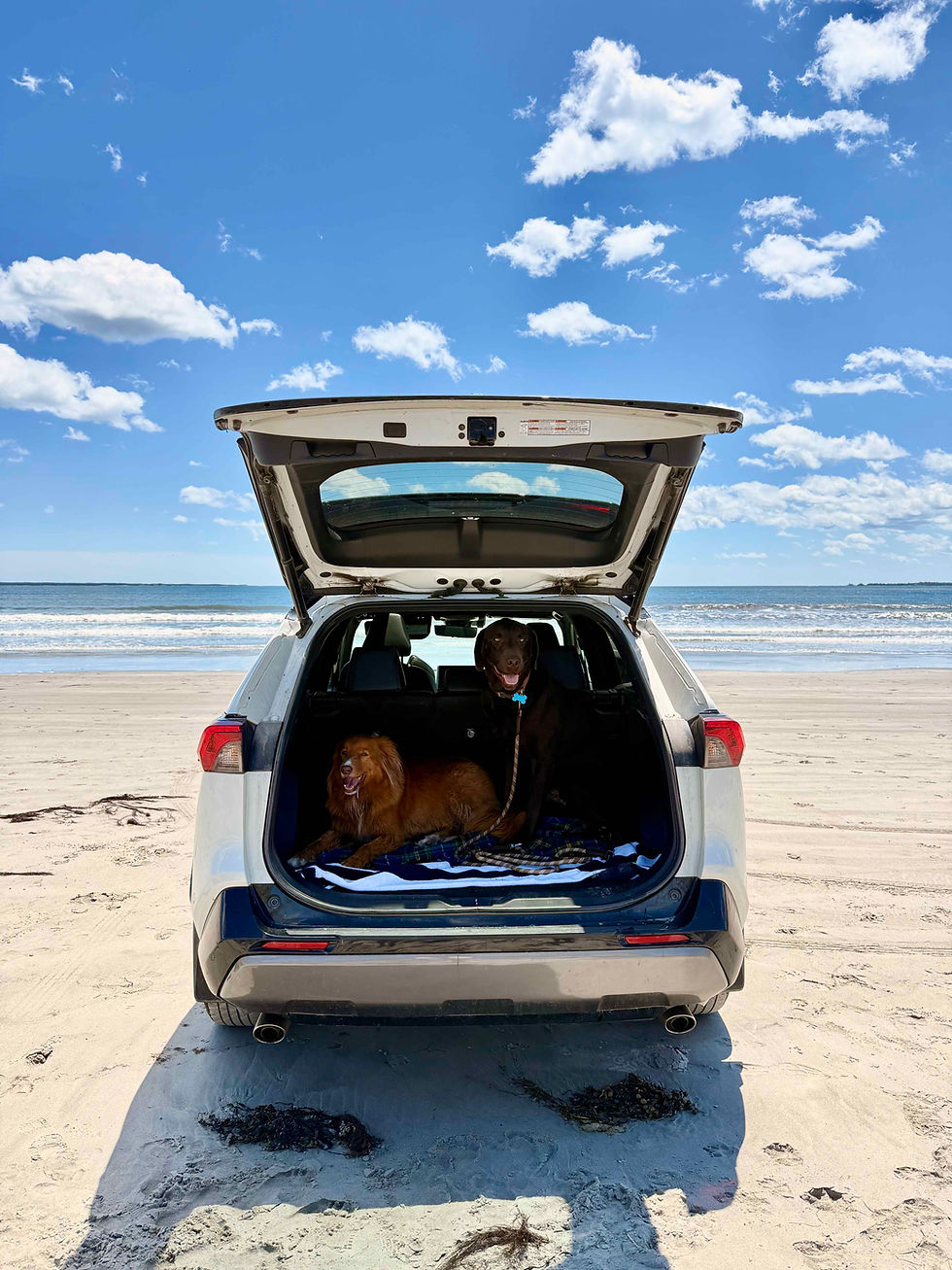
Julia's 2 dogs, Maverick and Hershey, after a walk on Crescent Beach - a South Shore beach you can drive on!